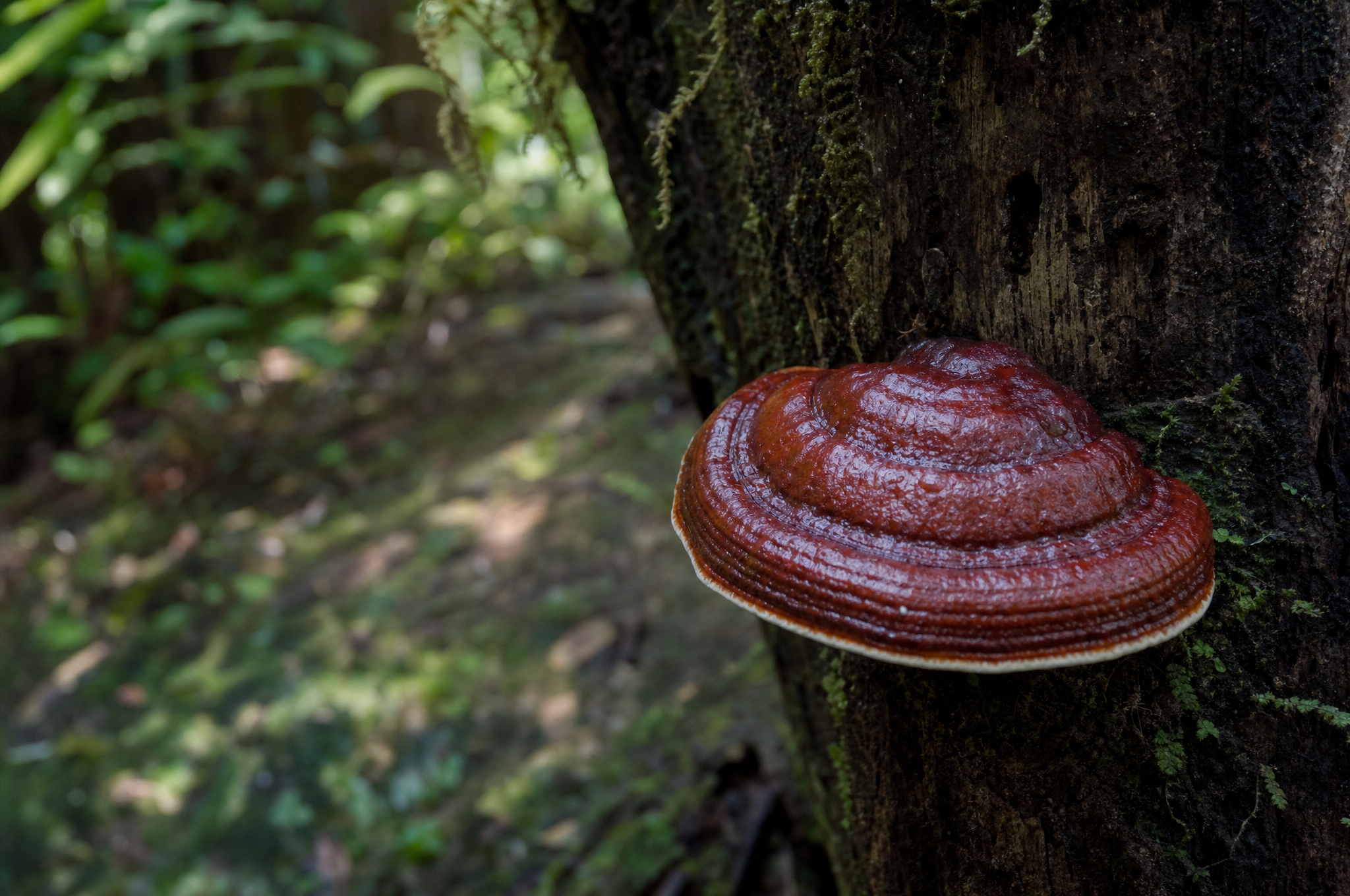
Among the many claims surrounding Reishi, its association with sleep is one of the oldest and most persistent. In Traditional Chinese Medicine, Reishi is classified as an an shen (安神) herb — a substance that "calms the spirit." It was traditionally used for restlessness, anxiety, and insomnia. But does this traditional use translate into modern evidence? Let's look at what studies actually show.
If you haven't already, read our overview of Reishi's history for context on how this mushroom entered the modern scientific conversation.
The Traditional Context
In TCM, Reishi's sleep-related use was not about sedation in the pharmaceutical sense. The concept of an shen is broader — it encompasses calming the mind, reducing agitation, and promoting a sense of groundedness that allows natural sleep to occur. Reishi was typically prepared as a decoction (a long-simmered tea) and often combined with other herbs in a personalized formula.
Several features of traditional preparation are worth noting:
- Reishi was almost always consumed as a hot water extract (decoction), not as raw powder — consistent with the extraction principles we discuss in our extraction article
- It was part of a holistic approach that included lifestyle, diet, and other herbs — not a standalone "sleep aid"
- Dosage and preparation were individualized by a practitioner, not self-prescribed
Modern supplement marketing often strips away this context, presenting Reishi as a standalone sleep supplement. The traditional practice was more nuanced.
What Modern Research Shows
Animal Studies
Several animal studies have explored Reishi's effects on sleep:
- Mice given Reishi extract showed increased total sleep time and increased non-REM (deep) sleep in some studies
- The effect appeared to be mediated through interaction with benzodiazepine receptors — the same receptors targeted by prescription sleep medications like Valium
- One study found that a Reishi water extract produced a sleep-enhancing effect that was blocked by flumazenil (a benzodiazepine antagonist), suggesting a GABAergic mechanism
These findings are interesting but involve rodent physiology and doses that may not translate to humans. The benzodiazepine receptor interaction, if confirmed in humans, would also raise questions about tolerance and interaction with prescription medications.
Human Studies
Human clinical trials specifically investigating Reishi for sleep are limited. What exists:
- A 2012 Japanese study of 48 breast cancer survivors found that Reishi powder (1.5g/day for 4 weeks) improved self-reported sleep quality and reduced fatigue. However, this was a specific population (cancer survivors), used self-report measures, and was not designed as a sleep study.
- A study of Reishi in patients with neurasthenia (a condition involving fatigue, headache, and irritability) found improvements in self-reported well-being, which included sleep quality. Again, this was not a dedicated sleep trial.
- No large, well-controlled, sleep-specific clinical trials have been published to date.
Traditional use for sleep is strong. Animal data is suggestive. Human clinical data is minimal. This is a common pattern in functional mushroom research — promising signals that haven't been followed up with rigorous human trials.
Potential Mechanisms
Several mechanisms have been proposed for Reishi's potential sleep effects:
- GABAergic activity: The benzodiazepine receptor interaction found in animal studies suggests Reishi may modulate GABA, the brain's primary inhibitory neurotransmitter. This would be consistent with a calming effect.
- Triterpene effects: Ganoderic acids (triterpenes from Reishi) have shown anti-inflammatory and potentially anxiolytic effects in preclinical models. Since anxiety is a major driver of insomnia, reducing anxiety could indirectly improve sleep.
- Adaptogenic effects: Reishi is sometimes classified as an adaptogen — a substance that helps the body manage stress. If it reduces stress physiology, sleep might improve as a secondary effect. (Note: "adaptogen" is not a rigorously defined scientific term.)
- Immune modulation: Poor sleep and immune dysfunction are intertwined. If Reishi's polysaccharides support immune function, this might indirectly benefit sleep — though this is speculative.
None of these mechanisms is confirmed in humans. They are plausible pathways based on preclinical data, not established effects.
What the Evidence Does and Doesn't Support
| Claim | Evidence |
|---|---|
| Reishi has been used traditionally for sleep | Well-documented in TCM texts |
| Reishi increases sleep in animals | Supported by several animal studies |
| Reishi improves sleep in humans | Limited — one small study in cancer survivors; no dedicated sleep trials |
| Reishi is a reliable treatment for insomnia | Not supported — insufficient clinical evidence |
| Reishi is safe for sleep use | Appears well-tolerated in short-term studies; long-term data limited |
Practical Considerations
If someone is considering Reishi for sleep — after consulting a healthcare provider — several practical points are worth knowing:
- Extraction matters: The triterpenes most associated with calming effects are alcohol-extracted, while the polysaccharides are water-extracted. A dual extract is likely most relevant for sleep. See our extraction guide for details.
- Timing: Traditional practice suggests consuming Reishi in the evening. There is no clinical data on optimal timing.
- Reishi is bitter: The triterpenes that may be relevant for sleep are intensely bitter. This is why traditional preparations involve long simmering and why many people prefer capsules.
- Drug interactions: Because Reishi may affect GABA receptors and has anti-coagulant effects in some studies, it could interact with sedatives, blood thinners, and blood pressure medications. This is why medical consultation is essential.
The Honest Position
Reishi's traditional use for sleep is genuine and long-standing. The animal data is interesting. But the human evidence is not strong enough to recommend Reishi as a sleep treatment, and it should not replace evidence-based approaches to insomnia — such as sleep hygiene, cognitive behavioral therapy for insomnia (CBT-I), or medical evaluation for underlying conditions.
If you have persistent sleep problems, please see a healthcare provider. Sleep disorders are medical conditions that deserve proper diagnosis and treatment — not self-medication with supplements, however traditionally revered.