If you've ever stood in a supplement aisle staring at a wall of mushroom products, you've probably noticed something: the labels are confusing. "Fruiting body." "Mycelium." "Beta-glucans." "Hot water extract." "1,000mg." "10:1 concentrate." Each phrase is chosen to sound impressive, but few consumers — and surprisingly few retailers — know what any of it actually means.
This article is a decoder ring. We'll break down the key terms on mushroom supplement labels, explain what matters and what's marketing noise, and give you a framework for evaluating products. We don't sell supplements and we don't endorse brands — this is purely educational.
Term 1: Fruiting Body vs. Mycelium
This is the single most important distinction on a mushroom supplement label — and it's often obscured. Let's recall the basics from our mycelium article:
- Fruiting body — the visible mushroom that grows above ground. This is what you'd find in the forest. It contains the compounds most associated with traditional use and most clinical research.
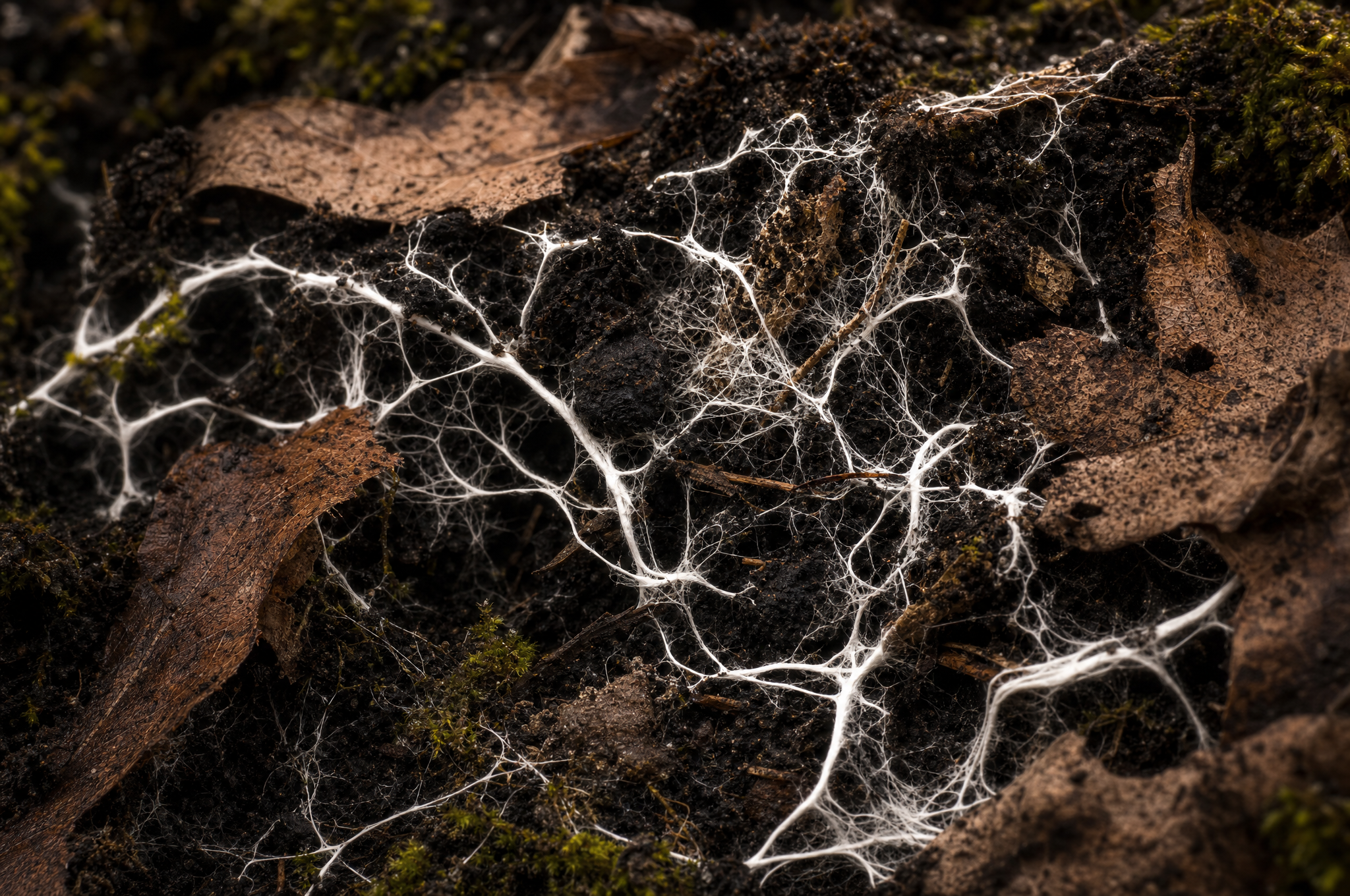
- Mycelium — the underground network of threads. Some important compounds (like Lion's Mane erinacines) are found primarily in mycelium, not the fruiting body.
- Mycelium on grain — mycelium grown on a grain substrate (usually rice or oats), then harvested and ground up. The final product contains mycelium and residual grain.
Many commercial supplements labeled as "mushroom" are actually mycelium grown on grain. The problem: when you grind up mycelium-on-grain, you get a product that is mostly grain starch, not mushroom. Some products have been tested and found to contain more starch than active mushroom compounds. Look for products that explicitly state "100% fruiting body" or that provide beta-glucan testing.
Why would companies use mycelium on grain? Because it's cheaper and faster. Fruiting body cultivation takes weeks to months and requires more space and expertise. Mycelium can be grown in fermentation tanks in days. The economics favor mycelium — but the biology favors fruiting body for most compounds.
Exceptions: Lion's Mane erinacines are in the mycelium, and the pharmaceutical compounds PSK and PSP (from Turkey Tail, discussed in our Turkey Tail article) are derived from mycelial cultures. The question isn't "fruiting body is always better" — it's "what part contains the compounds you're interested in?" For beta-glucans, the answer is usually fruiting body.
Term 2: Beta-Glucans
Beta-glucans are the primary bioactive polysaccharides in medicinal mushrooms. They are the compounds most associated with immune-modulating effects (see our Turkey Tail article for the mechanism). A quality supplement label will specify beta-glucan content as a percentage.
| Typical Beta-Glucan Content | What It Means |
|---|---|
| Not listed | Red flag — quality manufacturers test and report this |
| 10–25% | Low — may indicate mycelium-on-grain or low-quality extract |
| 25–40% | Moderate — typical for decent hot water extracts |
| 40–60%+ | High — indicates concentrated extract from fruiting body |
Reishi fruiting body extracts commonly test at 30–50% beta-glucans. Turkey Tail can be even higher. If a product claims "high potency" but doesn't list beta-glucan percentage, be skeptical.
Some labels list "polysaccharides" rather than "beta-glucans." This is a broader category that includes starch from grain. A product can claim "50% polysaccharides" while containing mostly grain starch and very little beta-glucan. Always look for beta-glucan specifically, not just "polysaccharides."
Term 3: Extraction Method
As we detail in our extraction article, the method of extraction determines which compounds you get:
- Hot water extract: Dissolves water-soluble compounds (beta-glucans, other polysaccharides). This is what most clinical research uses.
- Alcohol extract: Dissolves alcohol-soluble compounds (triterpenes, sterols). Important for Reishi.
- Dual extract: Combines both methods. In theory, the most comprehensive — but quality varies.
- No extraction (raw powder): The mushroom is simply ground up. Compounds remain locked in chitin and are largely inaccessible. This is the least bioavailable form.
A label that says "1,000mg mushroom powder" without specifying extraction may be selling you raw ground mushroom — which, as we discuss in the extraction article, is largely indigestible.
Term 4: Concentration Ratios (e.g., "10:1")
You'll often see labels like "10:1 concentrate" or "8:1 extract." This supposedly means that 10 pounds of raw mushroom were used to produce 1 pound of extract. In theory, a higher ratio means a more concentrated product.
In practice, these ratios are:
- Unverified: There is no standardized method for measuring or certifying these ratios
- Often meaningless: A "10:1" extract could be lower in active compounds than a well-made "4:1" extract
- Marketing language: The number sounds impressive but tells you nothing about beta-glucan or triterpene content
Ignore concentration ratios. Look at standardized compound percentages instead.
Term 5: "Organic," "Wildcrafted," and "Lab-Grown"
- Organic: Means the substrate was produced without synthetic pesticides/fertilizers. A good sign, but not a guarantee of quality or compound content.
- Wildcrafted: Means the mushroom was wild-harvested. For some species (like Chaga), this is standard. For others, it raises sustainability concerns (see our foraging ethics article). Wild-harvested mushrooms can also accumulate environmental contaminants.
- Lab-grown / cultivated: Often the most consistent and sustainable option. Cultivated mushrooms grow in controlled conditions, reducing contamination risk and ecological impact.
Term 6: Species Name (or Lack Thereof)
A quality label will specify the exact species. As we discuss in our Cordyceps species comparison, different species within the same genus can have very different compound profiles:
- "Cordyceps" could mean C. militaris (cultivable, high in cordycepin) or O. sinensis (wild, rare, expensive) or Cs-4 (fermented mycelium)
- "Reishi" could mean Ganoderma lucidum, G. lingzhi, or G. sinense
- "Lion's Mane" should be Hericium erinaceus, but check
If the label doesn't include the Latin binomial, that's a red flag. Quality manufacturers are transparent about exactly what species is in the product.
Term 7: Fillers and Additives
Check the "other ingredients" list. Common fillers include:
- Maltodextrin (a starch — dilutes the product)
- Magnesium stearate (a flow agent — generally harmless but unnecessary)
- Rice flour (a filler)
- Cellulose (capsule material — fine)
The fewer additional ingredients, the better. A product that is 100% mushroom extract in a cellulose capsule is ideal.
A Framework for Evaluating a Mushroom Supplement
Here's a quick checklist when you pick up a mushroom supplement:
- Species specified? Look for Latin binomial (e.g., Ganoderma lucidum)
- Fruiting body or mycelium? Prefer fruiting body for beta-glucans (mycelium may be appropriate for specific compounds like erinacines)
- Beta-glucan percentage listed? Look for 25%+ for hot water extracts
- Extraction method specified? Hot water, alcohol, or dual — not just "powder"
- Third-party tested? Look for mentions of independent lab testing
- Concentration ratio ignored? Don't be impressed by "10:1" — look at compound percentages
- Few fillers? The shorter the "other ingredients" list, the better
- Transparent about sourcing? Where was it grown? Is it organic or wild-harvested?
Red Flags
- Claims to "cure" or "treat" any disease (illegal for supplements and a sign of a dishonest company)
- Vague language like "proprietary blend" without specifying what's in it
- No Latin species name
- No extraction method specified
- "Polysaccharides" listed without specifying beta-glucans
- Extremely low price (quality mushroom extracts are not cheap to produce)
- Heavy reliance on "ancient wisdom" or "miracle" language
- No third-party testing or quality certifications
The Bottom Line
The mushroom supplement market is largely unregulated, and quality varies enormously. The same species can be sold as a high-quality, tested extract or as low-grade mycelium-on-grain powder — and the label may look similar to an untrained eye.
Understanding what the terms on the label actually mean is the first step to making informed decisions. The second step is recognizing that even a high-quality mushroom supplement is not a medical treatment. If you have a health condition, the person to consult is a healthcare provider — not a supplement label.
For more context on specific species and compounds, explore our Fungi Guide and our other research articles.